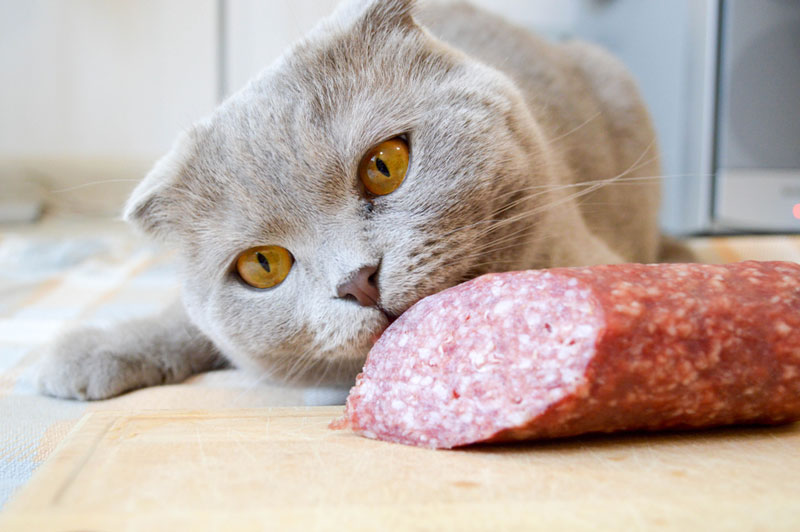
Have you ever wondered, can cats eat salami? The answer is a bit of a mixed bag. While salami is not toxic to cats, it is not the best treat for them either. Cats have specific dietary needs, and salami, being high in fats, sodium, and preservatives, could pose some health risks if given regularly.
So, while your furry friend might be eyeing that delicious slice of salami with wide, begging eyes, it’s essential to consider whether it’s the right choice for their health. Our feline friends have different nutritional needs than we do, and indulging in human food may not be the best option for them.
But don’t worry, we’re going to explore this topic in more detail. As pet lovers and guardians of our beloved pets, it’s important to make informed choices. Keep reading to find out more about the impact of salami on our ferocious friends, what to watch out for, and some tasty alternatives!
You might also be interested in: Can Cats Eat Raw Chicken?
Can Cats Eat Salami?

While cats can technically eat salami, it is not recommended as a regular part of their diet. Cats are obligate carnivores, meaning they require a diet high in animal proteins and specific nutrients that meat provides. Salami is usually made from processed meats that can include different types of pork and spices, both of which may not be suitable for feline consumption. In fact, salami often contains ingredients like garlic and onion that can be harmful to cats. Eating these ingredients can lead to serious health issues, so it is essential to keep them out of your cat’s diet.
The primary concern about giving cats salami relates to its high salt and fatty content. Salami is typically packed with sodium to enhance flavor and preserve its shelf life, but too much salt can be detrimental to your cat’s health. High sodium levels can lead to dehydration and, in severe cases, can strain their kidneys. Felines are not adapted to handle high levels of salt the way humans do, making it crucial to be cautious when considering any human food as a treat.
How Much Salami Can Cats Eat?
If you decide to give your cat a small piece of salami as an occasional treat, moderation is key. A tiny sliver here and there should not pose immediate risks, but it should not become a routine indulgence. The size of the treat is significant and may vary depending on your cat’s size and weight. As a general guideline, treats should make up no more than 10% of your cat’s daily caloric intake.
To put it into perspective, a small domestic cat requires about 200 calories a day, depending on its age, activity level, and weight. Ten percent of that would be around 20 calories, so if you give your feline friend a piece of salami that is about 15 calories worth, you are within a safe limit. However, it’s essential to monitor your cat for any reactions after they consume something new. If you notice digestive upset, vomiting, or lethargy, it may be better to avoid salty or processed meats entirely.
We also need to recognize that some cats are more sensitive to new foods than others. Individual reactions vary widely, so starting small will help in gauging your cat’s tolerance. Remember, our responsibility as pet owners is to provide a balanced diet for our hairballs, so opting for high-quality cat food will always take precedence over human snacks.
We should consistently provide alternatives that suit their dietary needs while avoiding processed snacks. If you feel tempted to treat your little feline companion, there are plenty of cat-friendly snacks specifically formulated for their nutritional needs. Incorporating safe treats in moderation keeps things exciting for your furball without compromising their health.
Ultimately, it’s crucial to consult your veterinarian if you have any doubts or want to introduce any new food into your cat’s diet. Your furry companion’s overall health should remain the number one priority!
Benefits Of Salami To Cats
1. Flavor: While it may sound strange, there are some advantages to giving your cat a little salami now and then. The major benefit is flavor. All cats love meat! The savory, salty taste of salami may be just the temptation your cat needs for training or rewarding good behavior.
2. Source of Protein: In small amounts, salami can also provide a source of protein. Although it isn’t this ideal protein for cats with all the right amino acids, any protein source can surely contribute to their energy, especially for active cats. Protein plays an essential role in maintaining their muscle mass and overall vitality.
3. Cats Enjoy Variety: Even though we want to ensure a balanced and nutritious diet for them, introducing new tastes without making it a habit can be enriching. This variety can keep your cat from developing food boredom. Salami may be just what they need to tickle their fancy now and then, so if you feel like a treat, just remember moderation is key!
4. Training Treat: Using salami as a training treat can create positive associations between you and your cat. When we reward them with a flavor they adore, it can create memorable moments together. Strong bonds develop through positive reinforcement, and brightening your cat’s day with a sliver of meat they love could help lead to a stronger human-animal relationship.
5. Curiosity and Excitement: Lastly, if your cat is genuinely bored or disinterested in their usual meal, a taste of salami could ignite a spark of curiosity and excitement! Sometimes a little shake-up in their routine food can bring a new zest to their dining experience. We always want our fur babies to eat well, so this can be an effective way to entice them to finish their meal!
Dangers Of Feeding Salami To Cats
Even if we can find some benefits to giving our cats small amounts of salami, we must also be cautious about the potential risks. One of the most notorious ones is the high sodium content, which can lead to sodium ion poisoning if consumed in large amounts over time. This condition can introduce symptoms such as excessive thirst, urination, and potential kidney damage, issues we’re desperate to avoid.
Another considerable danger involves the spices and seasonings commonly found in salami. Many types may contain garlic and onion, both of which can cause anemia in cats. These ingredients are toxic to them, even in small amounts. Symptoms of garlic or onion poisoning include weakness, vomiting, and lethargy.
Weight gain is yet another risk. Salami is high in fats and should not be a staple in their diet. Cats are known for loving fat, but when excess weight accumulates, it can lead to obesity-related problems. Obesity can reduce their lifespan and cause several health issues such as diabetes, joint problems, and heart disease.
We also need to be aware of the preservatives. Some salamis contain nitrates and other additives that are harmful when consumed regularly. These preservatives may lead to severe health conditions if our cats consume them too often. Always check the ingredients of any food we offer our cats and prioritize their safety and well-being over a tasty treat.
Keep in mind that every cat is an individual with unique preferences and tolerances. Some may experience indifference to salami, while others may develop stomach issues. Each time your cat tries a new human food, it is wise to remain observant for any changes in behavior or health. If something seems off, consult your vet immediately to keep your cat happy and healthy.
Substitute Of Salami For Cats
1. Chicken: As pet lovers, we want the best for our furry companions. When it comes to healthy treats, there are plenty of substitutes available if we want to give them something special. For a protein-rich snack that is safe for cats, consider unseasoned, cooked chicken breast. Felines love the taste of chicken, and it provides clean protein without added salt or harmful ingredients.
2. Tuna: This is another alternative that most cats find irresistible. When providing tuna, it’s vital to serve it sparingly and ideally in its own juice or water, without added salt. Much like salami, moderation is key here; while tuna may be a delightful treat, it’s not nutritionally complete for cats. It can be high in mercury, especially if provided regularly.
3. Specifically Formulated Treats: Additionally, think about shopping for treats specifically formulated for cats. There are numerous options available that provide essential nutrients without the risks associated with human food. Many brands create healthy cat snacks that deliver flavor and are packed with beneficial ingredients.
4. Eggs: Additionally, boiled eggs can be included in our list of cat-friendly substitutes. Eggs are high in protein and provide a plethora of nutrients that can contribute positively to your cat’s overall health. Just make sure they are well-cooked and offered in small amounts to avoid upset stomachs.
5. Catnip: Lastly, we should not overlook the power of catnip! Many felines enjoy the exciting effects of this plant, and it’s completely safe and harmless for them. Finding innovative ways to enhance our cats’ lives contributes to their happiness while steering clear of potential risks associated with processed food.
Can Cats Eat Salami? Frequently Asked Questions
Is It Safe To Give My Cat Salami As A Reward?
While a tiny amount once in a while may be safe, it’s best to avoid making it a regular reward. High salt and fat content make it unsuitable for consistent offering.
What Should I Do If My Cat Eats A Lot Of Salami?
If your cat has consumed a large quantity of salami, monitor them closely for signs of illness. If your feline friend exhibits any unusual behavior, it’s essential to contact your veterinarian for advice.
Are There Any Health Benefits To Salami For Cats?
While there are some benefits like flavor and protein, they are not sufficient to outweigh the risks. Healthier options will always be better for our furry companions.
Can My Cat Eat Other Processed Meats?
In general, processed meats can pose similar risks. They often contain preservatives and additives that are not suitable for cats. It’s best to stick with natural, unseasoned options.
What Are Safe Alternatives To Salami For My Cat?
Safe alternatives include cooked chicken, tuna, boiled eggs, and cat-formulated treats. They provide better nutrition while ensuring that your cat enjoys yummy snacks!
Final Thoughts
As we’ve discovered together, the question of whether cats can eat salami is complex. While a small slice may not be life-threatening, we must remember the importance of our cats’ health. Their diet plays a significant role in their overall well-being, and many alternatives offer delicious, safe options that cater to their tastes and nutritional needs. Keeping our fur babies happy and healthy is our top priority, and there are tons of feline treats out there that are much more beneficial than processed meats. Let’s explore healthier options and learn along the way!
Remember to be wise with what we offer our furry familiars, ensuring that we prioritize their health over our desire to share our snacks. If you’re interested in expanding your knowledge on other pet-safe foods or what foods to avoid altogether, feel free to check out cats and meats or cats and liver. Staying informed ensures we can provide the best for our furry companions while having fun along the way!