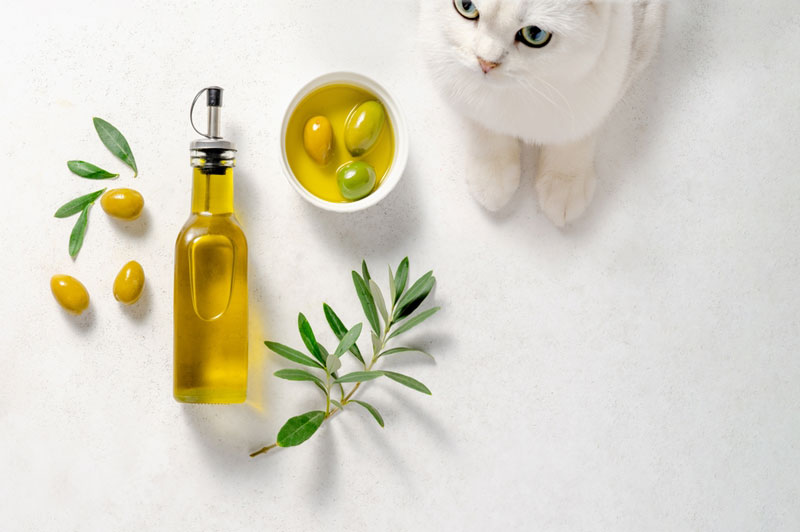
Can cats eat olive oil? This is a question many cat owners have when trying to determine what is safe and healthy for their furry friends. The good news is that, yes, cats can eat olive oil in small amounts, and it can even offer some benefits!
Olive oil is known for its health benefits for humans, and it can provide some advantages for our feline pals too. While our kitties are obligate carnivores and depend heavily on meat for their diet, incorporating olive oil in moderation can serve as a healthy supplement.
So, if you’re curious about how olive oil can fit into your cat’s diet, keep reading to discover the ins and outs, the potential benefits, and some important considerations, all of which will help you make an informed decision!
You might also be interested in: Can Cats Eat Avocado Oil?
Can Cats Eat Olive Oil?
Let’s clarify things a bit! Cats can indeed eat olive oil. It is important to understand that while olive oil is safe for cats, it should only be offered in moderation. Cats are obligate carnivores, which means their diet primarily consists of meat. Their digestive systems are not well-adapted to large amounts of plant-based foods. However, when it comes to olive oil, it can act as a supplement rather than a main food source.
One of the best things about olive oil is that it’s packed with healthy fats and antioxidants. These benefits can be passed on to our whiskered companions. For instance, extra virgin olive oil contains omega-3 and omega-6 fatty acids, both of which are essential for a cat’s overall health.
But we also need to remember that moderation is key! Too much olive oil can lead to digestive upset and weight gain. It’s always best to consult our veterinarian before making any changes to our pets’ diets. With the right guidance, we can introduce olive oil into our cats’ lives and explore its potential advantages.
How Much Olive Oil Can Cats Eat?
Now, let’s discuss the magic number! The amount of olive oil we can safely give our cats really depends on their individual needs and health situations. Generally speaking, a good starting point could be about half a teaspoon a day for a regular-sized adult cat. This seems to be a safe and manageable amount.
But, whoa there! Not all cats are created equal. Factors like weight, age, and overall health play huge roles in determining the right amount for our kitty. For instance, if we have a playful little kitty who weighs just six pounds, a small amount like a quarter teaspoon may be sufficient. On the flip side, larger or more active cats may tolerate a tiny bit more.
Always remember to introduce any new food gradually. This gives our cats time to adjust and helps prevent any stomach issues. After starting out with small amounts, we should monitor our feline friends for any signs of discomfort, like vomiting or diarrhea.
It is also crucial to consider that olive oil should never replace a balanced cat diet. If we decide to incorporate it, we should view it as a healthy addition to their regular meals rather than the main dish. Feeding our cats the right amount of food, ensuring they are getting all the necessary nutrients, is vital for their well-being!
In case our cats show signs of allergies or sensitivities, we should stop feeding them olive oil immediately and consult our vet. It may be tempting to “go big or go home” with some cooking explorations, but being cautious is always a good approach with our pets!
Benefits Of Olive Oil To Cats
1. Healthy Skin and Coat: One of the most significant benefits of olive oil is its ability to promote healthy skin and coat. Just like how olive oil can improve our skin, it can also help keep our cats’ coats shiny! The fatty acids in olive oil provide moisture and nourishment to our fur babies’ skin, helping with dryness and itchiness.
2. Help with Digestion: Another perk of olive oil is that it may help with digestion. Some cats can experience occasional digestive issues, and a small amount of olive oil may help ease their tummy troubles. It can promote regular bowel movements, especially for felines prone to hairballs. Let’s face it, no one enjoys hairballs, right?
3. Antioxidant Properties: Olive oil is known for its antioxidant properties. Antioxidants help combat free radicals in the body, which can lead to cellular damage. By including olive oil in our cat’s diet, we are giving them an edge in fighting those pesky free radicals!
4. Support Heart Health: This healthy oil can also support heart health. The monounsaturated fats found in olive oil are known to contribute to a healthy cardiovascular system. A strong heart is vital for our cats’ overall well-being and longevity.
5. Adds Flavor to Meal: Last but not least, olive oil can add some flavor to our cats’ meals! Sometimes, our picky eaters turn their noses up at their regular food. A drizzle of olive oil can make their meals more appetizing and satisfying. We all know that happy cats make for happy homes!
Dangers Of Feeding Olive Oil To Cats
As with any food, it’s crucial to be aware of potential risks and dangers when feeding our cats olive oil. While it can offer some advantages, feeding too much olive oil could lead to weight gain. If we aren’t careful, our kitties may become little couch potatoes with excess calories.
Another downside to overindulgence is the possibility of digestive upset. Just like humans, cats can face tummy troubles when they try new foods. Signs of discomfort could include diarrhea or vomiting. If we notice these symptoms after introducing olive oil, we should stop immediately and take our furry friends to the vet.
It’s also important to note that cats with specific health concerns, such as pancreatitis or obesity, should steer clear of high-fat foods like olive oil. If our feline friends fall into this category, we need to prioritize consulting our vet before trying out olive oil. It’s like keeping our little superheroes safe from harm!
Lastly, some brands of olive oil may contain additives or flavorings that aren’t safe for cats. Always ensure we are using high-quality, pure extra virgin olive oil without any nasty surprises. Reading labels may help us avoid these hidden dangers.
In summary, olive oil can have both benefits and risks. If we carefully monitor our cats’ intake and stay watchful for behavioral changes, we can enjoy the perks of olive oil while minimizing any potential issues.
Substitute Of Olive Oil For Cats
1. Fish Oil: If we’re looking for alternatives to olive oil, we might want to explore fish oil. Rich in omega-3 fatty acids, fish oil can offer similar health benefits and is known for improving skin and coat health!
2. Coconut Oil: This is another fantastic option. Packed with healthy fats, it contributes to weight management and supports immune health. Plus, many cats enjoy the taste!
3. Castor Oil: This has been used for its laxative effects. If our cats are struggling with constipation or hairballs, a tiny amount of castor oil might provide some relief. However, we should check with our vet to ensure it’s safe for our specific cat.
4. Chicken or Beef Broth: Another choice is chicken or beef broth. Adding a little flavor to our cats’ food can pep up their meals just like olive oil. Just ensure it’s low in sodium and free from onions and garlic!
5. Pumpkin Puree: Finally, consider using pumpkin puree. It’s not just for pies, people! Pumpkin is high in fiber, and it helps with digestion too. A small scoop mixed into their meals can also add flavor and nutrients!
Can Cats Eat Olive Oil? Frequently Asked Questions
Will Olive Oil Make My Cat Sick?
In moderation, olive oil is generally safe. However, if too much is given or if the cat has pre-existing health conditions, it may lead to digestive issues.
Can Olive Oil Help With Hairballs?
Yes! Olive oil can help reduce hairballs in cats by promoting smoother digestion. It helps to lubricate the digestive system.
How Do I Introduce Olive Oil To My Cat?
Start small! Begin with a tiny amount mixed into your cat’s food and observe how they react. If their stomach seems fine, gradually increase the measurement.
Is All Olive Oil Safe For Cats?
While many types are safe, ensure you use high-quality, pure extra virgin olive oil with no additives or flavorings that could be harmful.
Can Kittens Have Olive Oil?
It’s best to avoid giving olive oil to kittens as their stomachs are sensitive and their nutritional needs are different. Always consult your vet.
Final Thoughts
In closing, we can conclude that cats can indeed enjoy olive oil in moderation. Its potential benefits, from promoting a healthy coat to aiding digestion, can be a wonderful addition to our feline friends’ diets. However, we need to be mindful of the risks and listen to our kitty’s needs! Consulting with our vet can guide us in the best practices when introducing new foods.
As we explore these culinary avenues for our pets, let’s remain committed to providing our cats with a balanced and nutritious diet. If you found this information helpful, feel free to explore more pet-related topics such as what sardines in olive oil can do to cats or if cats can have olives! Together, let’s keep our furry companions happy and healthy!